

If you searched adstotally-com hoping to fix a weak ad campaign, you are not alone. Plenty of people type that name into Google while looking for ad help. The site itself appears to be a general content and guest-post site, not an ad network or a campaign tool. So you will not find a dashboard there to run your ads.
What you can do is fix your ads yourself, and it is easier than it looks. Below are 10 simple changes that improve click-through rate, lower cost per click and bring in more real customers.
What Is adstotally-com, and What It Isn’t
Based on what review sites report, adstotally-com publishes articles on topics like business, tech and lifestyle. It does not appear to offer ad serving, publisher payouts or an advertiser sign-up.
That matters because people often assume the name means “ads platform.” If you need to run ads, use a real platform such as Google Ads, Meta Ads or Microsoft Advertising. Then use the steps below to make them work harder.
How to Get Better Ad Results: The Short Answer
To get better ad results, match each ad to a clear search intent, write a specific headline, send clicks to a fast and relevant landing page, and track conversions. Then test one change at a time and cut whatever wastes money.
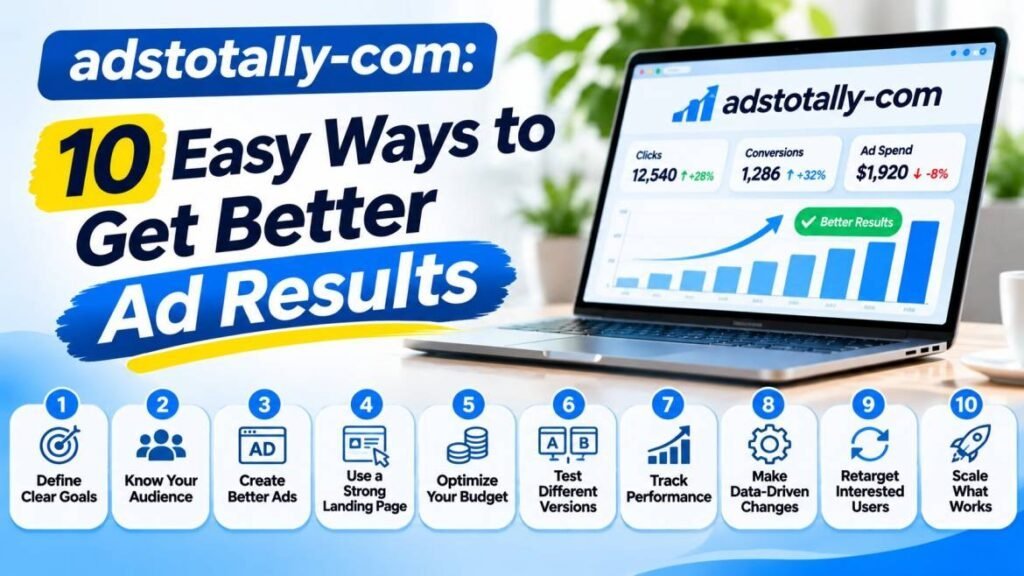
10 Easy Ways to Get Better Ad Results
1. Start With One Clear Goal
“More traffic” is not a goal. “20 qualified leads a month under $15 each” is. Pick one outcome per campaign, such as sales, calls or sign-ups. Every choice after that gets easier.
2. Set Up Conversion Tracking First
If you cannot see which clicks turn into customers, you are guessing. Set up conversion tracking for purchases, form fills and calls before you spend much. It shows you which ads and keywords actually pay off, so you can move budget there.
3. Match Ads to Search Intent
Someone searching “buy running shoes size 10” wants a different ad than someone searching “how to choose running shoes.” Group similar keywords into tight ad groups, and write each ad for that one intent. This is the heart of ad relevance.
4. Write Headlines People Actually Click
Be specific. Compare these two:
- Weak: “Best Plumbing Services”
- Better: “Leak Fixed Today, From $79”
Put the main keyword in the headline, add one real benefit, and include a number or a clear offer when you can.
5. Fix Your Landing Page Before You Raise Your Budget
A great ad that lands on a slow, confusing page wastes money. Google rates this as landing page experience, and it feeds into Quality Score. Check these basics:
- The page loads fast on mobile
- The headline repeats the promise of the ad
- One clear button or form, not five
- No pop-ups that block the page
Google’s own guide to using Quality Score to improve performance is a good place to see how ad relevance, expected CTR and landing page experience fit together.
6. Use Negative Keywords to Stop Wasted Clicks
Open your search terms report once a week. If you sell premium watches and see clicks from “free watch,” add “free” as a negative keyword. This one habit can cut wasted spend quickly, and it costs nothing.
7. Add Ad Extensions
Extensions give your ad more room and more reasons to be clicked. Add sitelinks, call buttons, location details and short callouts such as “Free shipping” or “Same-day service.” They often lift click-through rate with almost no extra work.
8. Test One Change at a Time
Run two versions of an ad and change only one thing, like the headline or the offer. Let the test run long enough to collect real data. If you change five things at once, you will never know what worked.
9. Refine Your Audience and Targeting
Broad targeting burns budget. Narrow by location, device, time of day and audience type. Then try remarketing, which shows ads to people who already visited your site. These visitors usually convert at a better rate than cold traffic.
10. Review Your Numbers Every Week
Ads are not “set and forget.” Check the same few metrics each week and act on what you see.
| Metric | What It Tells You | Quick Fix if It’s Weak |
|---|---|---|
| Click-through rate (CTR) | Whether your ad is appealing | Rewrite headlines, add extensions |
| Cost per click (CPC) | How much each visit costs | Improve Quality Score, add negatives |
| Conversion rate | Whether your page turns visits into action | Simplify the page, sharpen the offer |
| Cost per conversion | What a customer really costs | Pause weak keywords, adjust bids |
| Return on ad spend (ROAS) | Whether ads make money | Shift budget to top performers |
Symptom-to-Fix Cheat Sheet
Not sure where your problem is? Match what you see to the likely cause.
| What You See | Likely Cause | First Move |
|---|---|---|
| Many impressions, few clicks | Weak or generic ad copy | Test new headlines |
| Many clicks, no sales | Landing page mismatch | Align page with the ad |
| High cost per click | Low Quality Score | Tighten ad groups, improve relevance |
| Spend runs out by noon | Budget too thin for broad targeting | Narrow location and keywords |
| Good clicks, poor leads | Wrong audience or keywords | Add negatives, refine targeting |
A Simple 30-Day Plan
If you want a clear path, try this:
- Week 1: Set your goal, install conversion tracking, and clean up your keyword groups.
- Week 2: Rewrite ads for each group and add extensions.
- Week 3: Fix the landing page and add negative keywords from your search terms report.
- Week 4: Start one A/B test and review your metrics table.
Small, steady changes beat big, messy overhauls.
Common Mistakes That Hurt Ad Results
- Sending all traffic to the homepage
- Changing bids and copy at the same time
- Ignoring mobile users
- Judging a campaign after two days
- Chasing clicks instead of customers
Your ads also need pages worth landing on. Google’s advice on creating helpful, people-first content applies to landing pages too, because clear and honest pages earn trust and conversions.
Be Careful With Paid Placements and Guest Posts
Some people reach adstotally-com while looking for guest-post options. If you go that route, check the site’s real traffic, topic fit and audience before you pay. Backlinks from weak or unrelated sites rarely help, and they can hurt your reputation. For more on judging sites and link sources, see this related read on hmjones-net.
Conclusion
If adstotally-com brought you here, the main takeaway is simple. It is a content site, not an ad tool, so the real work happens in your own campaigns. Set one clear goal, track conversions, match ads to intent, fix your landing page, cut wasted clicks and test steadily. Do those things and better ad results usually follow, without a bigger budget.
FAQs
Is adstotally-com an ad network?
No. Reviews describe it as a general content and guest-post site, with no advertiser sign-up or ad-serving tools.
What is a good click-through rate for ads?
It depends on your industry and platform. Many search campaigns land somewhere around 2% to 5%, but compare against your own past results first.
How long does it take to see better ad results?
Small fixes like negative keywords can help within days. Give tests at least two weeks so the data is reliable.
What is the fastest way to lower my cost per click?
Improve ad relevance and landing page experience. A higher Quality Score usually brings lower CPC.
Do I need conversion tracking to run ads?
Yes. Without it, you cannot tell which ads bring customers and which only bring clicks.
Should I use guest posts to boost my ads?
Guest posts are an SEO tactic, not an ad tactic. Judge each site on traffic and relevance before paying.